How to Do a Dumbbell Bench Press
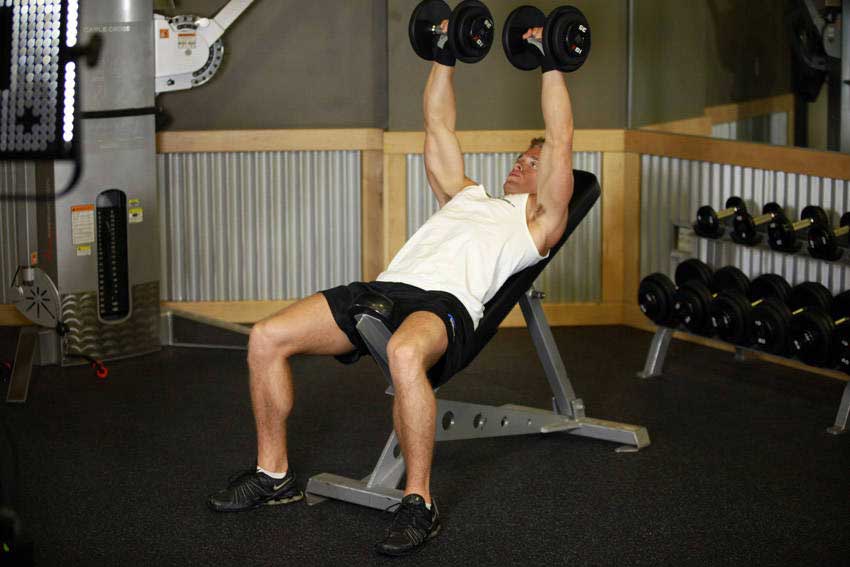
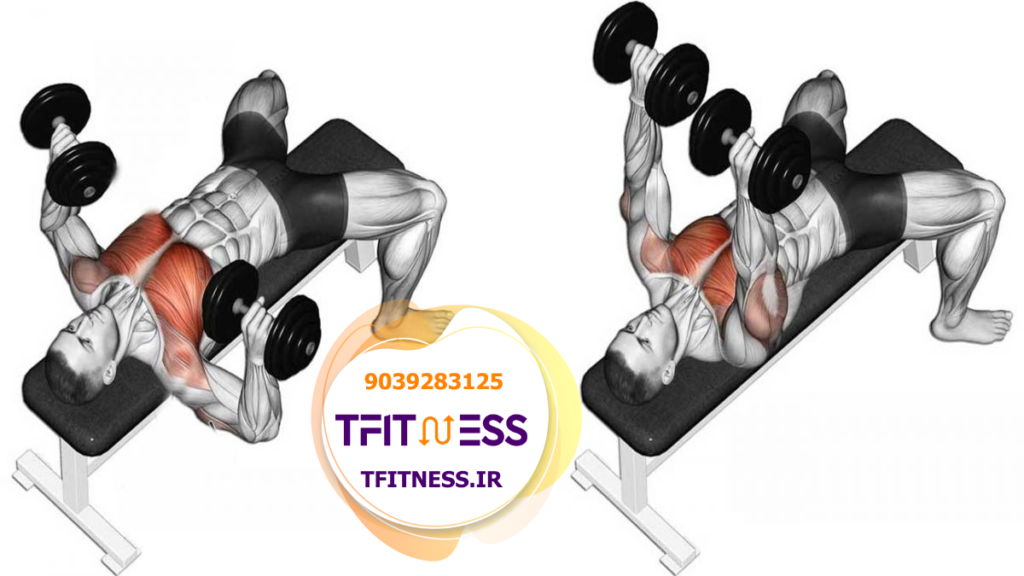
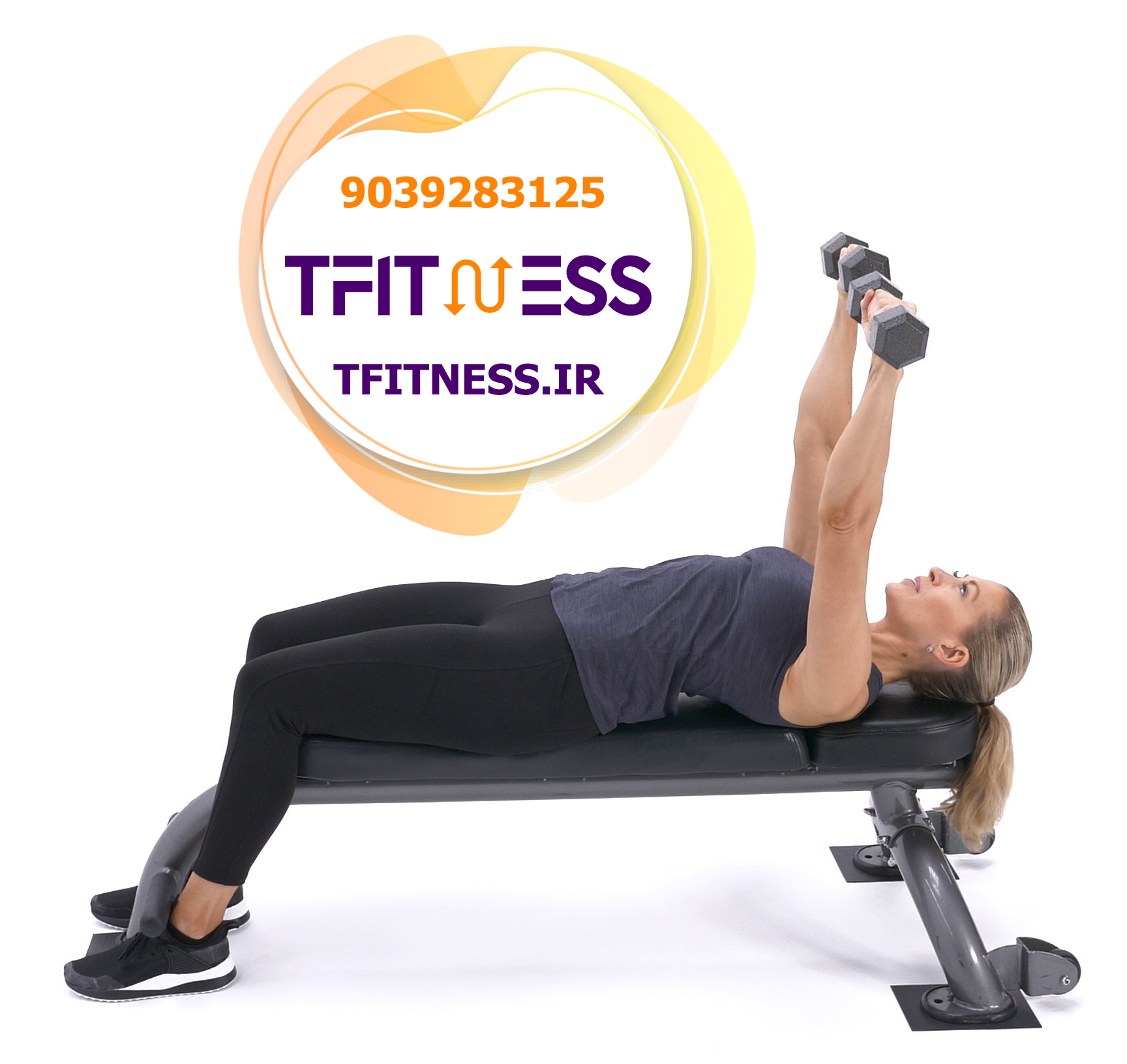
To perform the classic dumbbell bench press, you’ll lie down on your back on a workout bench, holding a free weight in each hand above your armpits, says Antonia Henry, M.Sc., R.Y.T., an NASM-certified personal trainer and pregnancy and postpartum athleticism coach. Then, you’ll extend your arms to press those dumbbells up toward the ceiling, briefly pause, and finally lower the weights back to your chest.
Having trouble picturing the exercise? Watch Henry’s demo below and take note of her form. If you’re looking for more detailed directions, including how to safely get into position with your weights, here’s an explainer:
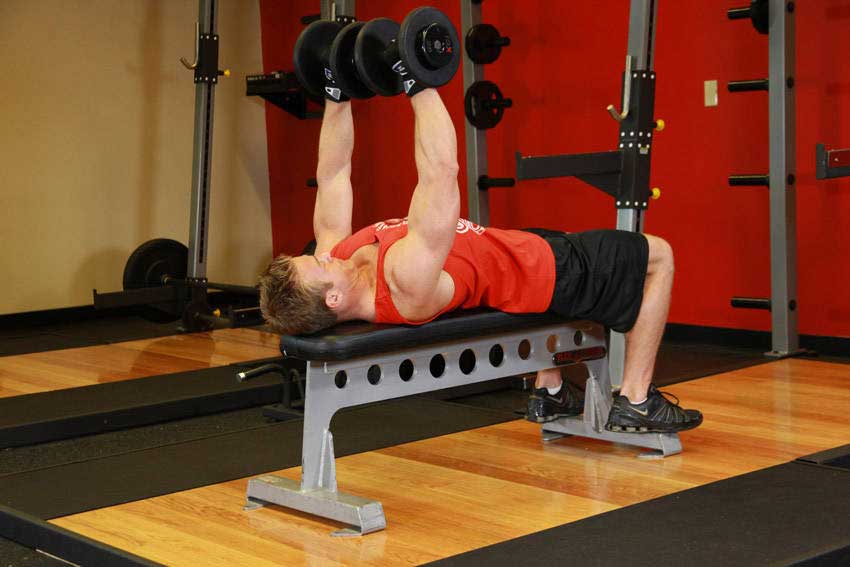
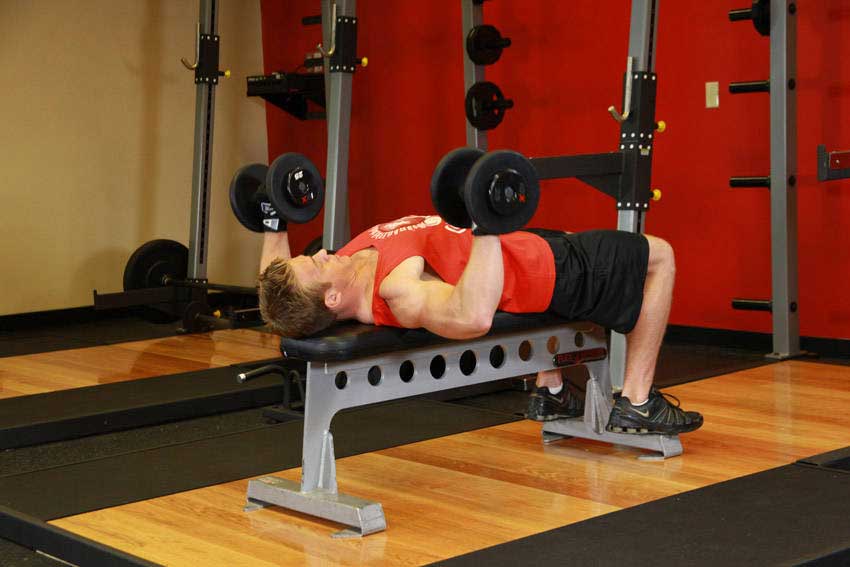
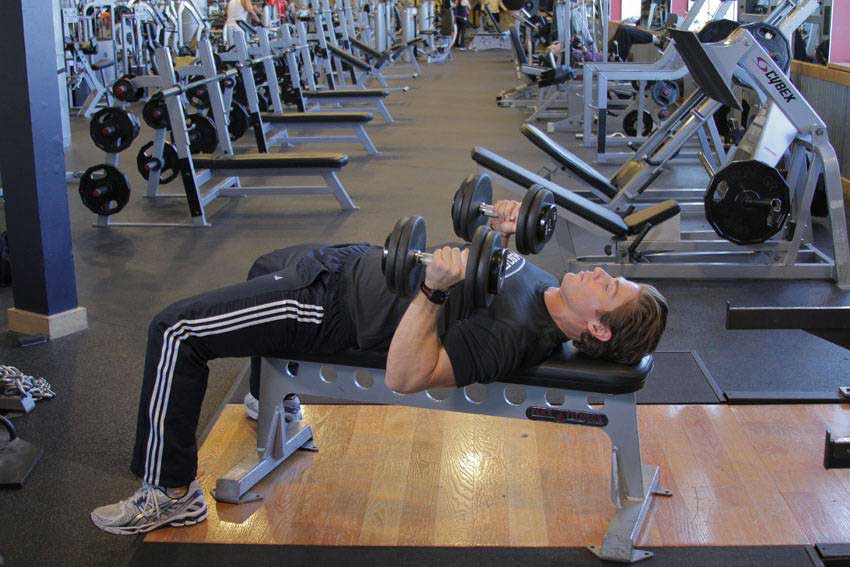
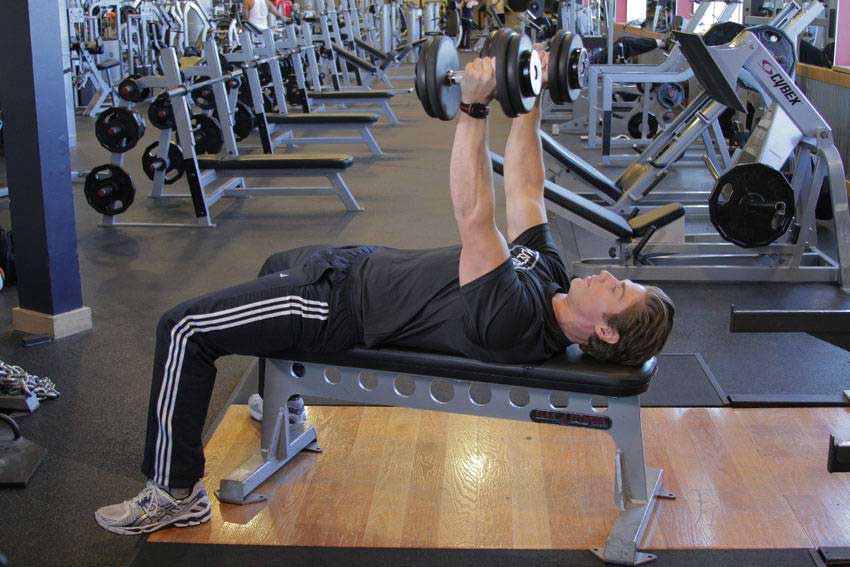
A. Sit on a bench with a medium-weight dumbbell in each hand, resting on thighs.
B. Squeeze elbows tight to ribs and slowly lower torso down onto the bench to lie faceup, holding the dumbbells in front of armpits. Open elbows to the sides so triceps form a 45- to 70-degree angle to torso. Press feet flat into the floor and engage core. This is the starting position.
C. On an exhale, press the dumbbells away from chest, straightening arms so the dumbbells are directly over shoulders.
D. On an inhale, slowly lower the dumbbells back to the starting position, pausing when the dumbbells are just above shoulders.
The Key Dumbbell Bench Press Benefits
Still not convinced that you should add dumbbell bench presses to your upper-body routine? Let these benefits persuade you:
Improves Push-Up Performance
Struggling to perform more than a few push-ups without your form breaking down? The dumbbell bench press will be your best friend. This exercise is more accessible than a push-up, as it doesn’t require as much core stabilization, but it builds strength in the same muscles called on during the bodyweight move, says Henry. That’s why “if you put the dumbbell bench press together with something like a plank, you’ll be well on your way to getting some awesome push-ups,” she says.
Targets Shoulder Stabilizers
Doing a bench press with dumbbells, rather than a barbell, comes with an extra perk. “Because this variation requires more stability in the shoulder, it’ll help strengthen the small stabilizer muscles in the shoulder more than when you use a barbell,” says Heidi Jones, a TRX-certified Fortë trainer and founder of Sweat to Change TV. And that’s a good thing: When one of your joints has limited stability (aka its ability to control its movement or position), you might compensate your movement, which can increase the risk of injury and cause muscle imbalances, according to the American Council on Exercise.
Helps You Address Muscle Imbalances
During a dumbbell bench press, you’re able to move your arms independently and even choose to do reps on just one side of your body at a time. In turn, the exercise can help you notice — and correct — muscle imbalances, says Henry. “Every single person in the world has one side of their body that’s stronger than the other,” she explains. “For some people, it’s just a little bit, but for other people, it’s a lot.”
The problem: Those muscle imbalances, just like a lack of joint stability, can cause you to alter your movement patterns and consequently up your risk of injury. “When you’re doing a unilateral exercise, which means an exercise that you can do just one side at a time, you’re able to identify those strength and coordination deficits better than if you have both sides working at the same time, since [the stronger side] can help the weaker side,” says Henry. Then, you can focus on building up the weaker side of your body.
Can Be Accessible to People with Shoulder Injuries
While you generally have to tackle a traditional barbell bench press with a pronated (overhand) grip, you’re able to adjust your hand positioning as necessary during the dumbbell version — a feature that’s particularly beneficial to folks with shoulder issues, says Henry. “For someone who has shoulder pain, had a torn rotator cuff, any shoulder trauma, a more neutral grip, meaning with your hands facing each other, is going to be easier on the shoulder joint,” she explains. “But you can’t do that with a barbell.”
Dumbbell Bench Press Muscles Worked
As previously mentioned, when done right, the dumbbell bench press involves full-body activation. “The bench press uses your shoulders, triceps, forearms, lats, pecs, traps, rhomboids, and pretty much every muscle in your upper body,” says Niren. “However, the bench press doesn’t only use your chest or upper body. When you bench properly, you use your lower back, hips, and legs to stabilize your entire body, create a solid base, and generate drive from the ground,” she explains.
That’s right: No noodle legs allowed. You should engage your quads and glutes to really press your feet into the ground and create stability. Plus, don’t forget to activate your core to keep your back safe and form on point.
Dumbbell Bench Press Variations
Whether you’re new to weightlifting, fresh off an injury, or ready for another challenge, the traditional dumbbell bench press may not be a good fit for you — and that’s okay. In any case, you should feel comfortable modifying or progressing the move to get exactly what you want out of your workout.
Modification: Single-Arm Dumbbell Bench Press
Bench pressing may help you build strength for push-ups, but you can also do bodyweight push-ups to prepare your muscles for the dumbbell bench press. If both are too challenging, try regressing to eccentric push-ups: Start in a high plank position and lower the body as slowly as possible to the floor. Shoulder issues? “A 45-degree or neutral grip (read: palms facing in) will target the chest muscles slightly differently and will allow those with shoulder issues a better bench position,” notes Jones.
True newbies, however, may want to start off with a single-arm dumbbell bench press, which Henry demonstrates below. Instead of pressing both weights up to the ceiling simultaneously, you’ll focus on doing your reps on one side at a time, which reduces some of the coordination and mental energy involved in the move, says Henry. “Any time that you’re doing an [new] exercise, you’re not only training the muscles, but you’re also training your central nervous system,” she explains. “You tell your brain to do something, your brain tells your muscle [to contract], and all of that happens rapidly…When you do one side at a time, you can just use all of your brain power on that one side.”
Progression: Continuous Tension Dumbbell Bench Press
If you’re crushing the dumbbell bench press, up the ante by doing it with a barbell instead, which allows you to lift heavier and thus gain more muscle. Or, try variations such as a close-grip bench (which more heavily targets the forearms and triceps), speed bench (read: pressing the bar as fast as you can), or banded bench press (which jacks up the resistance), says Niren. Just make sure you’re using a spotter or benching safely if you start to really bump up the weight.
Better yet, try a continuous tension dumbbell bench press, during which you keep the non-working arm fully extended toward the ceiling between reps, suggests Henry. “The number one benefit of doing this is that the stabilization requirement is through the freaking roof,” she adds. Specifically, you’ll have to engage your whole body in order to keep yourself from tipping over to the side as you lower one dumbbell to your chest, she says. Not to mention, your non-working arm will still have to work during it’s “break” to ensure the weight stays hovering above your chest.
Common Dumbbell Bench Press Mistakes
After you lie down on the bench, make sure your feet can firmly plant onto the floor, which is essential for stabilizing your upper body throughout the dumbbell bench press, says Henry. If you’re too short of reaching the ground, placing your feet on weight plates or firm, cork yoga blocks at the sides of the bench, she suggests. Once you’re settled, make sure your triceps form a roughly 45- to 70-degree angle with your sides — not a 90-degree angle, which can place excessive strain on your pecs, says Henry.
In order to fully engage the muscles of the upper body, from the bottom position, squeeze shoulder blades together as if pinching a pencil between them. This will press the lats into the bench. Be sure to move the dumbbells straight up and down in line with the center of the chest to maintain proper form. And finally, avoid “dumping” your shoulder, or allowing your shoulder to pull forward, says Henry. If you make this mistake, the dumbbells will end up between your breasts and belly button, not your clavicle and breasts, at the bottom of the movement, she says. “That would probably cause just a ton of discomfort initially, and over time it could cause injury,” she adds.
How to Add the Dumbbell Bench Press to Your Routine
Ready to add the dumbbell bench press to your fitness routine? Make sure you get the all-clear from your doctor if you’re testing a workout regimen for the very first time or if you have blood pressure issues, says Henry. The exercise involves lying down and returning to standing after your sets, which can cause a quick drop in blood pressure in some individuals and lead to lightheadedness, weakness, or fainting, according to the Mayo Clinic.
Once you get the green light, do the dumbbell bench press at the top of your workout, as it’s a compound movement (read: it works multiple muscle groups and joints) and can be pretty fatiguing, says Henry. In this case, strive for three sets of eight to 10 reps per side, she recommends. But if you’re holding off on the move until later in your strength-training session, ease up on the weight and aim to hit three sets of 12 to 15 weights, she suggests.
And remember, choose the dumbbell chest press variation that feels right for you at that moment. There’s no shame in tweaking the exercise to work best for your body, fitness level, and abilities.